

A setting disappeared in July and most advertisers did not notice. Their audience sizes did.
Meta retired the old off-platform activity opt-out. The control now sits inside a wider one. That wider setting covers how Meta uses the data brands send. Not whether the data arrives (Source: Common Thread Collective, 2026 — commonthreadco.com).
The result is quiet and large. People who had opted out are matchable again.
This post covers what changed. What it does to your audiences and your reports. And the short list of things to fix this month.
What Actually Changed
Strip out the privacy language and the mechanic is simple.
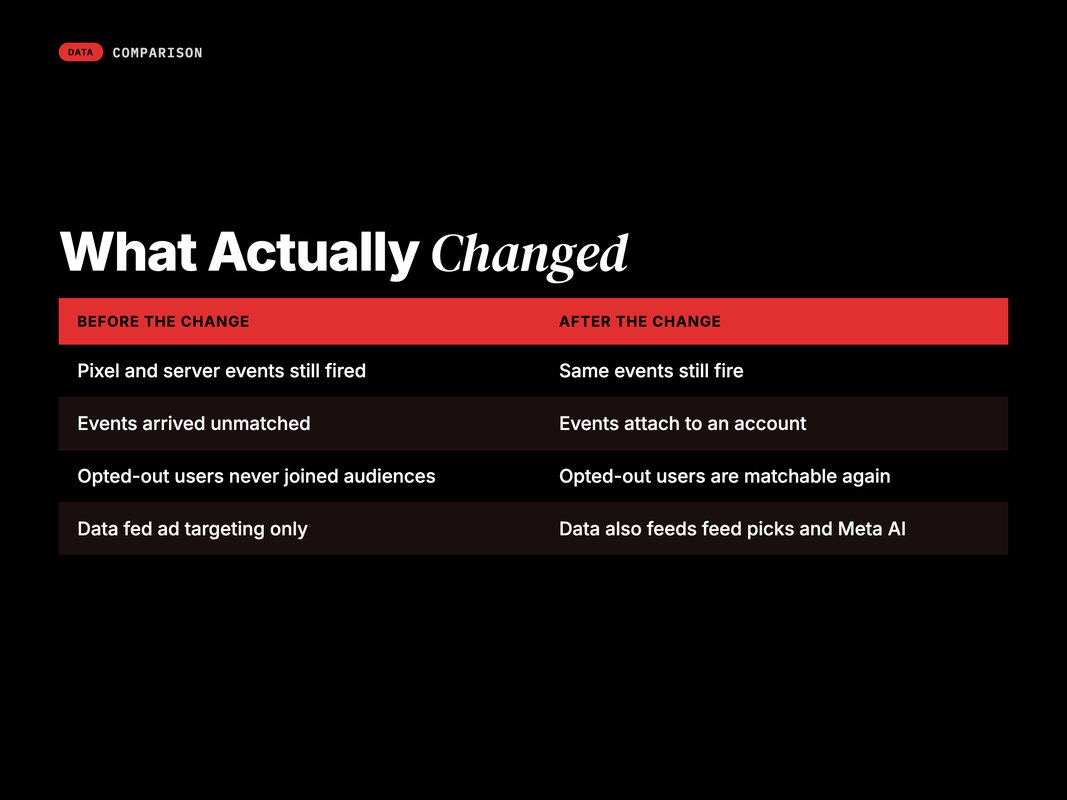
Before, a user could disconnect their off-platform activity. Your Pixel and Conversions API still fired. Meta still received the events.
But those events arrived unmatched. They could not be tied to an account, so they never joined a retargeting audience or a lookalike seed.
Now that link is restored. The same events land, and they attach to a person.
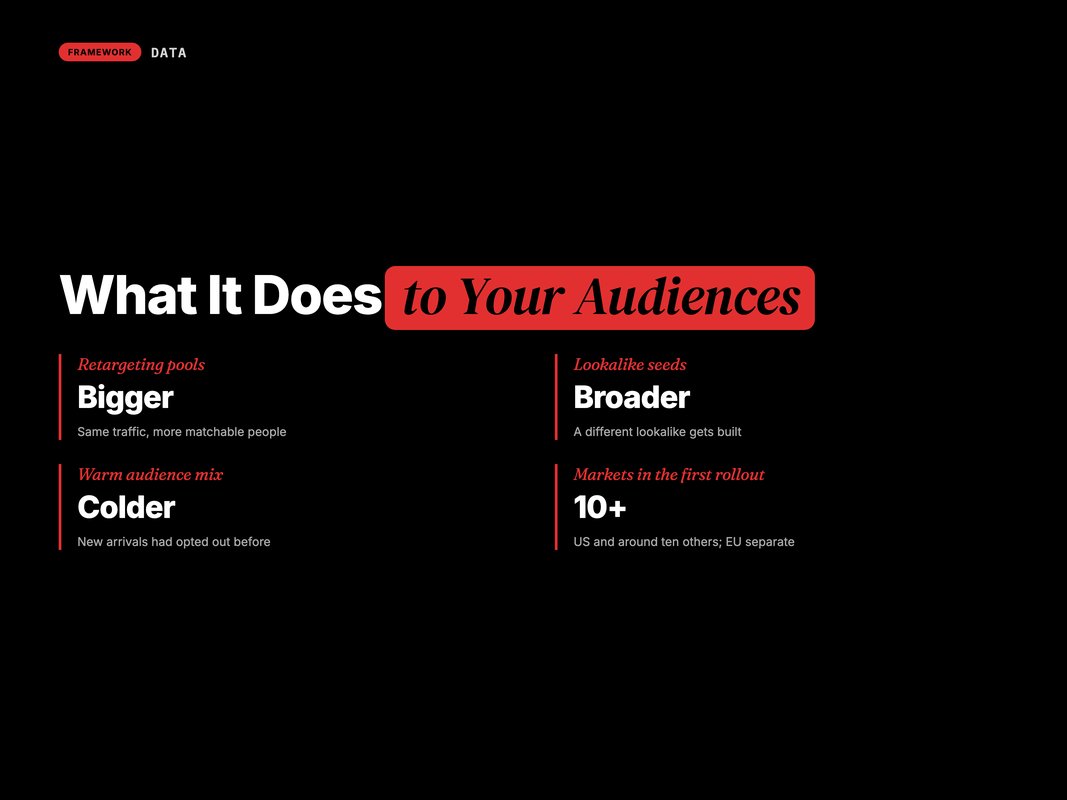
The change began in July 2026 across the US and about ten more markets. The EU is being handled on its own. Rules there limit Meta's power to drop an opt-out people actively chose (Source: Common Thread Collective, 2026 — commonthreadco.com).
There is a second half to this that got less coverage.
Off-platform data used to feed ad targeting only. It now also shapes feed picks and Meta AI answers (Source: Tech Times, 2026 — techtimes.com).
So the signal you send for ads now shapes two more things. What a person sees in the feed. And what an assistant tells them.
Q: Did Meta start collecting new data?
A: Not exactly. The events were already arriving. What changed is that Meta can now connect more of them to a specific account.
What It Does to Your Audiences
Here is where it stops being a policy story and starts being an account one.
Brands building audiences through the Pixel or server events are seeing pool sizes grow. Opted-out users are re-entering the match pool (Source: AdBeacon, 2026 — adbeacon.com).
Three things follow from that.
Retargeting pools got bigger. Your 30-day site visitor audience holds more people than it did in June, with no change in traffic.
Lookalike seeds got bigger. More matched buyers means a broader seed. A broader seed builds a different lookalike.
Your warm audience got colder. This is the one that hurts. The new arrivals had actively opted out before. On average they are less engaged than the people already in the pool.
So a campaign you have not touched since June now serves a different mix of people. Its cost per action can move with no edit from you.
That is not always bad. More reach at the warm end is useful. It just is not the audience you built.
Q: How do I tell if my pools grew?
A: Compare audience size on a date in late June with the same audience today. If it grew more than 20 percent with flat traffic, this is why.
What It Does to Your Reporting
The measurement effect is subtler and it lasts longer.
Tracking gets better when more events can be matched. That sounds purely good. It also breaks your month-on-month view.
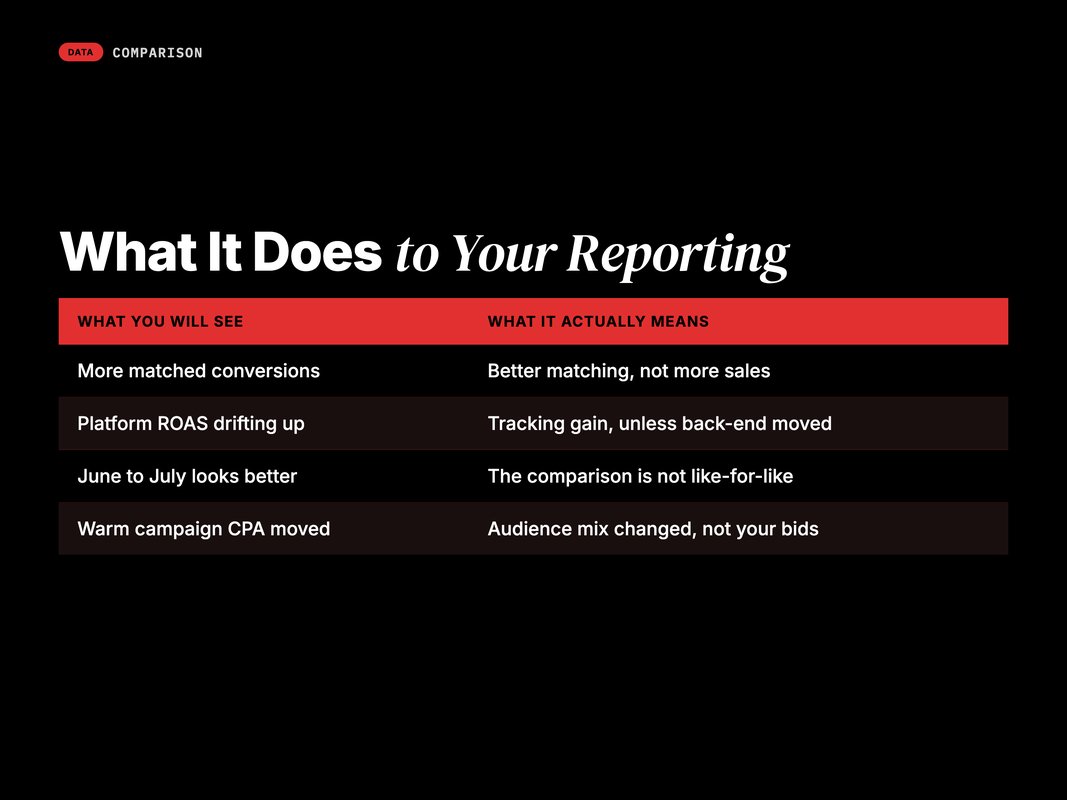
More matched sales means Meta now claims credit it could not claim before. Reported sales can rise with no real change in the business.
Two practical consequences.
June to July is no longer like-for-like. Not on any account in a rolled-out market.
Reported ROAS will drift up. If your back-end revenue did not move, that drift is tracking. Not results.
The fix is the one that fixes most Meta report problems. Anchor on back-end revenue and blended cost. Not on what the platform claims.
If you run a holdout test, keep running it. This is exactly the kind of change that makes one worth the trouble.
Q: Should I re-baseline my targets?
A: Yes, once the change has been live in your markets for a full month. Set the new baseline from that month and note the date in your reporting.
What to Actually Do This Month
Five actions, in order. None of them take long.
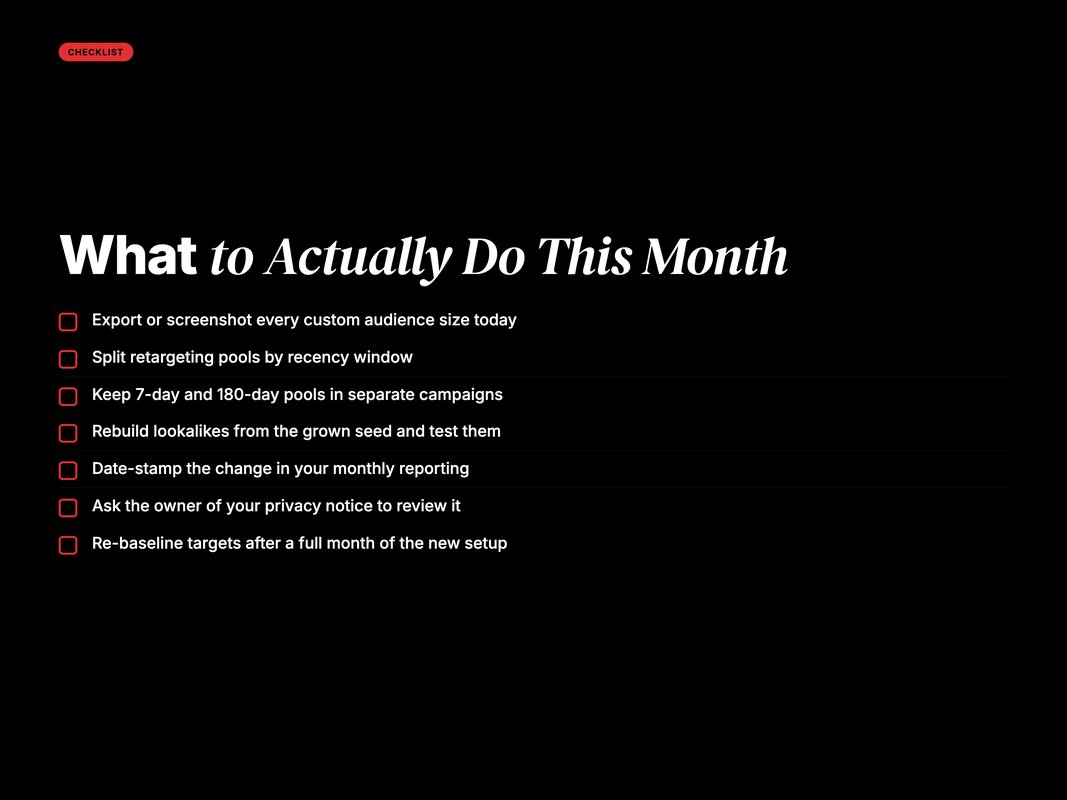
One. Record your audience sizes. Screenshot or export every custom audience today. You need a marker for what changed.
Two. Split pools by recency. A 7-day visitor pool and a 180-day pool should never share a campaign. If they do, the big pool eats the budget. The people closest to buying get less of it.
Three. Rebuild your lookalikes. A seed that grew a lot deserves a fresh build. Run the new one against the old one. Keep the winner.
Four. Note the change date in your reporting. A single line in the monthly deck saves an hour of confused debate later.
Five. Check your privacy notice. If your site tells users what happens to their data. The destination changed, your notice may need updating. Ask whoever owns that.
That last one is not a marketing task. It is also the one most likely to be missed.
None of these five take more than an hour. Together they cost an afternoon and save a quarter of guessing.
Q: Do I need to change my Pixel or CAPI setup?
A: No. The plumbing is unchanged. What changed is what Meta does with the events after they arrive.
The Bigger Pattern Worth Naming
Step back and this is the third variant of the same story in two years.
Platforms narrow what they share about people. They widen what they work out inside their own systems. Your view of the path shrinks. Their power to act on it grows.
The response is not to fight it. It is to build the parts you can still own.
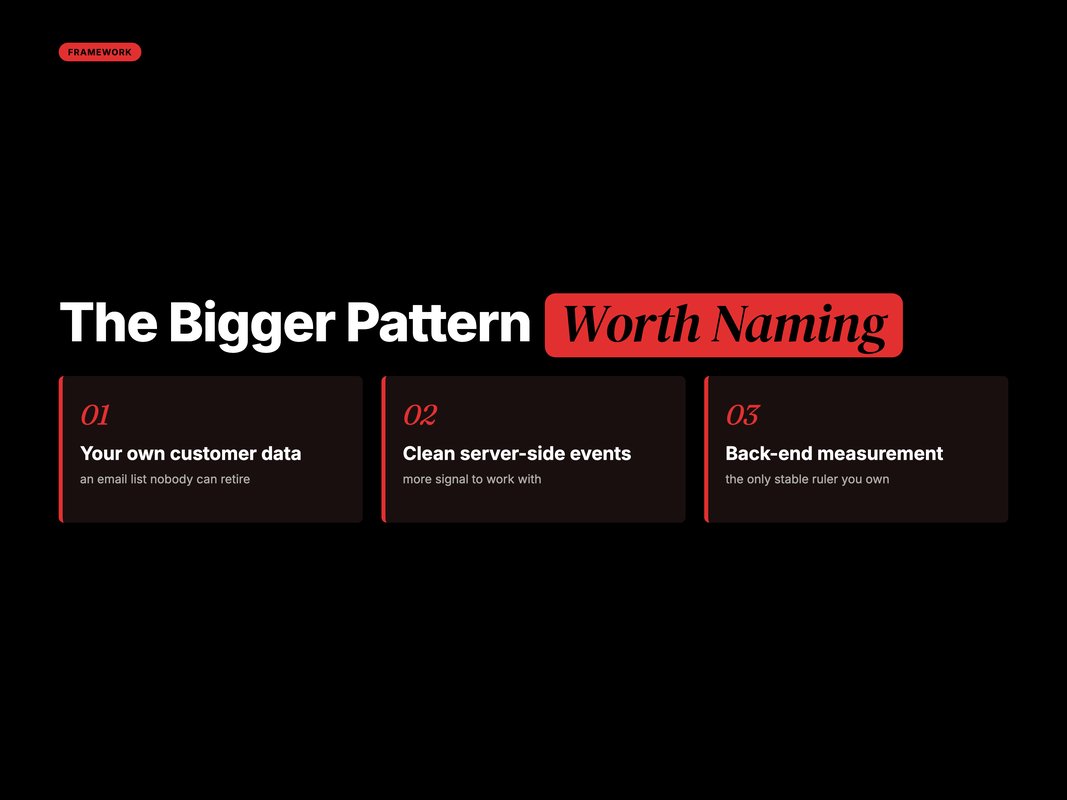
Three assets survive every version of this change. They are worth more each time it happens.
Your own data gets more valuable every time this happens. An email list and a clean customer database are the only signals nobody can retire.
Server-side event quality matters more. Thin or badly matched server events hand the platform less to work with. And it is doing more with what it gets than ever.
Back-end numbers are the only stable ruler. Platform figures will keep moving for reasons that have nothing to do with your work.
None of that is new advice. This change just raises the cost of ignoring it.
How We Handle Changes Like This
Platform changes rarely announce themselves in the account. They show up as a number that moved, with no reason anyone can name.
YARD is an AI-first growth marketing agency. We run performance marketing, LLM SEO, AI creative and AI funnels for D2C and B2B brands. Tracking platform changes and translating them into account actions is standing work, not a special project.
Our routine on a change like this has three parts.
We snapshot the account state before we change anything. Audience sizes, campaign structure, baseline metrics. You cannot measure an effect you did not record the start of.
We split the tracking effect from the real effect. Platform numbers get checked against back-end revenue before anyone draws a conclusion.
And we date-stamp the change in the client's reporting. Six months later, when someone asks why July looks odd, the answer is already written down.
If your Meta numbers moved in July and the explanation is still a shrug, that is worth an afternoon. For the cost side of the same month, see Why Did My Meta Ad Costs Jump This July?.
The Short Version
Meta retired the off-platform data opt-out in July 2026 and folded it into a broader control.
Events that used to arrive unmatched now attach to accounts. Retargeting pools and lookalike seeds grew on their own.
Bigger is not automatically better. Your warm audience now holds colder people, so re-segment by recency before you judge performance.
Reporting moved too. More matched sales can lift reported results with no real change in the business. Anchor on back-end revenue.
Do five things this month. Record audience sizes, split pools by recency, rebuild lookalikes, date-stamp the change in reporting, and check your privacy notice.
Then get back to the part that still compounds. First-party data and clean server-side events survive every one of these changes.
Want your July numbers separated into real movement and measurement noise? Talk to the YARD team.
FAQ
Q: What did Meta change about off-platform data?
A: Meta retired the separate off-platform activity opt-out in July 2026. It now sits inside a broader control that governs how Meta uses business data, not whether that data arrives.
Q: Does this make my retargeting audiences bigger?
A: Yes. People who had switched off the old setting are matchable again. Pixel and Conversions API events that were unusable now join audiences and lookalike seeds.
Q: Where does off-platform data get used now?
A: It used to power ad targeting only. It now also feeds content recommendations and Meta AI responses. That is a threefold expansion in where your signals land.
Q: Does this apply in the EU?
A: Not on the same terms. The rollout began in July 2026 across the US and around ten other markets. The EU is being handled separately under privacy law.
Q: Is a bigger audience automatically better?
A: No. A pool that grows overnight holds colder, less engaged people. Your warm campaign starts behaving like a cool one unless you re-segment it.
Q: What is the first thing to do?
A: Record your current audience sizes, then split retargeting pools by recency. A 7-day pool and a 180-day pool should not sit in the same campaign.
Insights from Our Experts
Explore our latest articles on digital marketing strategies.