How Little Bansi Became the First Kids' Ethnicwear Brand to Rank Across ChatGPT, Perplexity, Claude, Gemini & Bing
Project Breakdown
Most D2C brands are still trying to win Google. Little Bansi quietly started winning the layer above it. In under six months, YARD took a kidswear brand from zero AI-search presence to category-leading visibility on every major LLM — while cutting CAC by 44% and tripling revenue.
| Client | Little Bansi |
|---|---|
| Industry | D2C Kids' Ethnic Wear |
| Region | India (pan-India shipping) |
| Channels | Meta, Google, Organic SEO, LLM SEO (AEO/GEO) |
| Engagement | Performance Marketing + LLM SEO + Content |
| Timeline | 6 months |
The Client
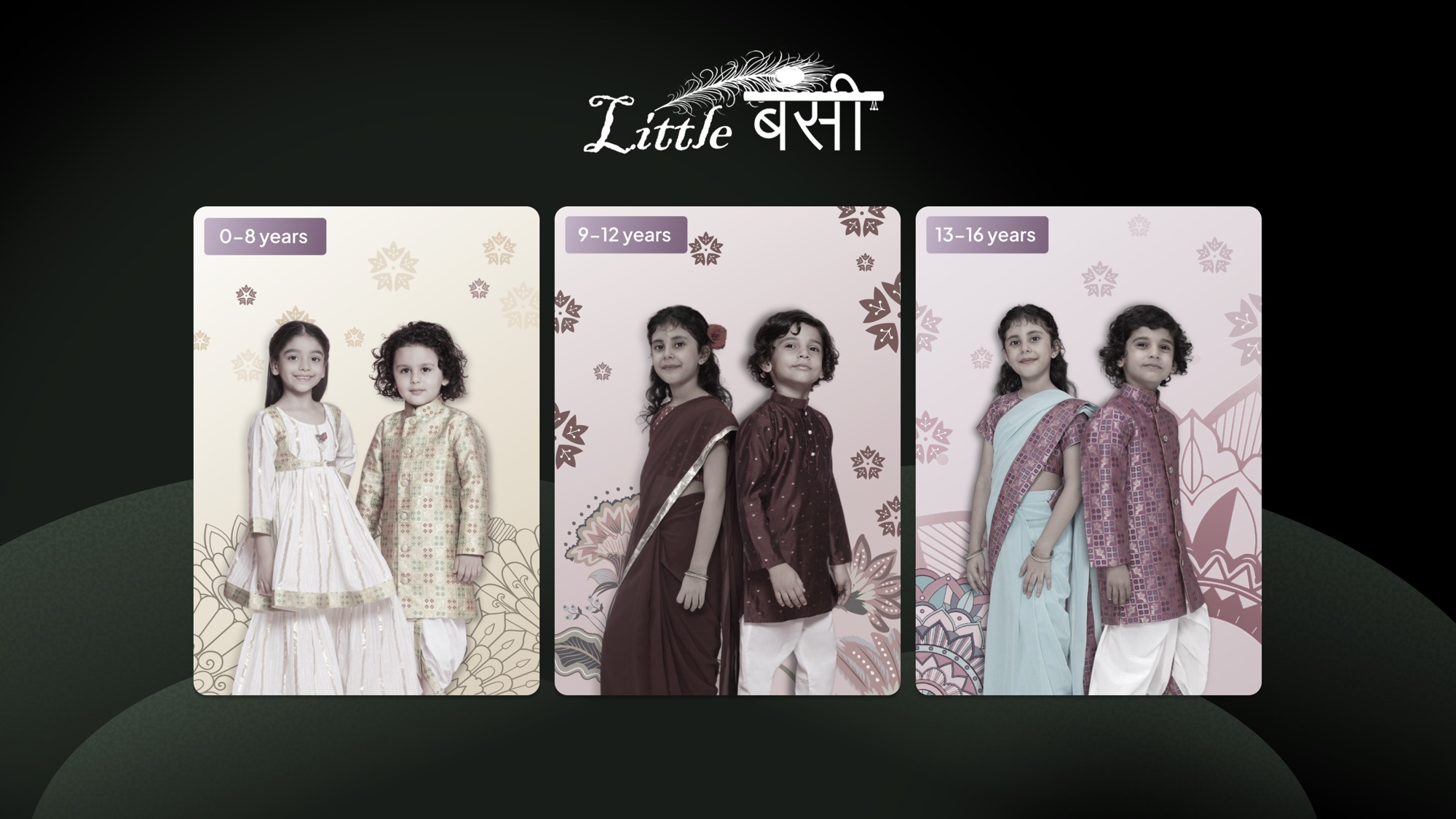
Little Bansi is a digitally-native Indian kidswear brand making the kind of handloomed, festival-ready ethnic wear that used to live only in boutique shops. Beautiful product, loyal repeat customers, strong organic brand love. Mothers and grandmothers send each other Little Bansi WhatsApp screenshots before festivals; that's the kind of brand they had quietly built.
What it didn't have, until late 2025, was discovery.
The category is structurally difficult. Kidswear has a short product lifecycle (a child grows out of the size in months), a heavily seasonal demand curve (festivals, weddings, school events), and a buyer (the parent) who has more emotional investment than the average D2C shopper. Search is the dominant discovery surface, but search itself is changing — the share of family-planning and gifting queries that now begin in an LLM instead of Google has climbed measurably year-on-year, and nobody in the kidswear category had built for it yet.
The Problem
Three structural issues were quietly capping growth:
1. ROI collapse at scale
Meta worked beautifully up to a point. Past that point, blended CAC ballooned and ROAS halved. The brand had outgrown its ad-only growth model and didn't know it. Each additional dirham of Meta spend was reaching audiences the brand had already shown to twice — a clear sign that prospecting was running ahead of category awareness, not behind it.
2. Cataloging built for warehouses, not buyers
Product taxonomy was binary — "boys" and "girls." A parent searching "anarkali for 4-year-old girl wedding" had no path into the catalogue. Search demand existed; the site couldn't catch it. The site's information architecture mirrored the warehouse, not the parent's mental model — which is occasion (Diwali, wedding, haldi) first, age band second, silhouette third.
3. Invisible on AI search
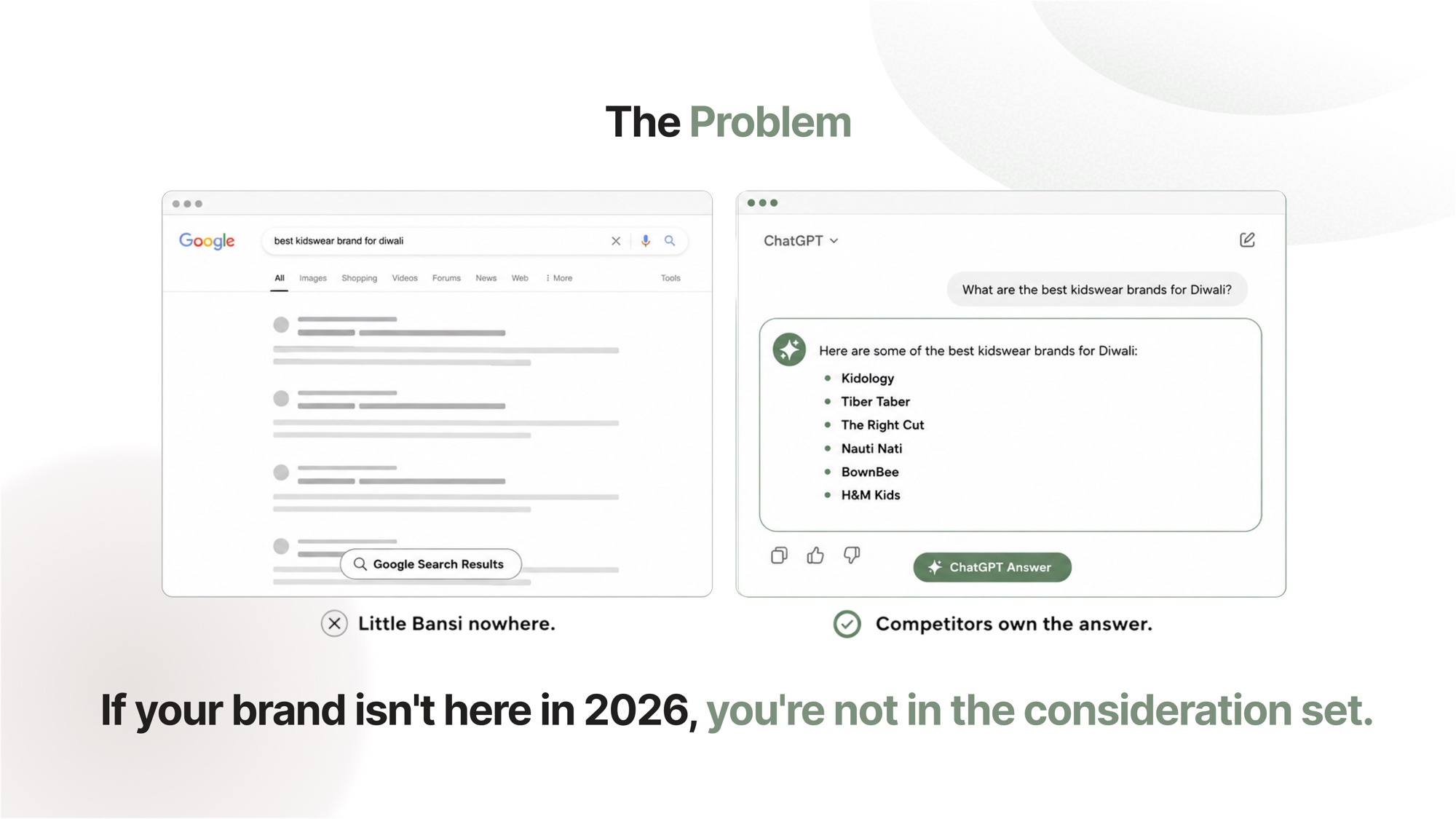
ChatGPT, Perplexity, Claude, and Gemini are now the first stop for an increasingly large slice of intent queries — especially in family/parenting verticals where the buyer wants a recommendation, not a list of links. Little Bansi didn't appear in a single answer. Neither did most of the category.
The bigger insight: whoever shows up first in LLM answers in 2026 will own the next decade of category recall in their vertical. The window to claim that real estate is still open. It will not be open in a year — once the category's category-leader is being cited consistently inside the answer, the second mover has to convince the model to replace the existing citation, not just appear alongside it.
The Strategy
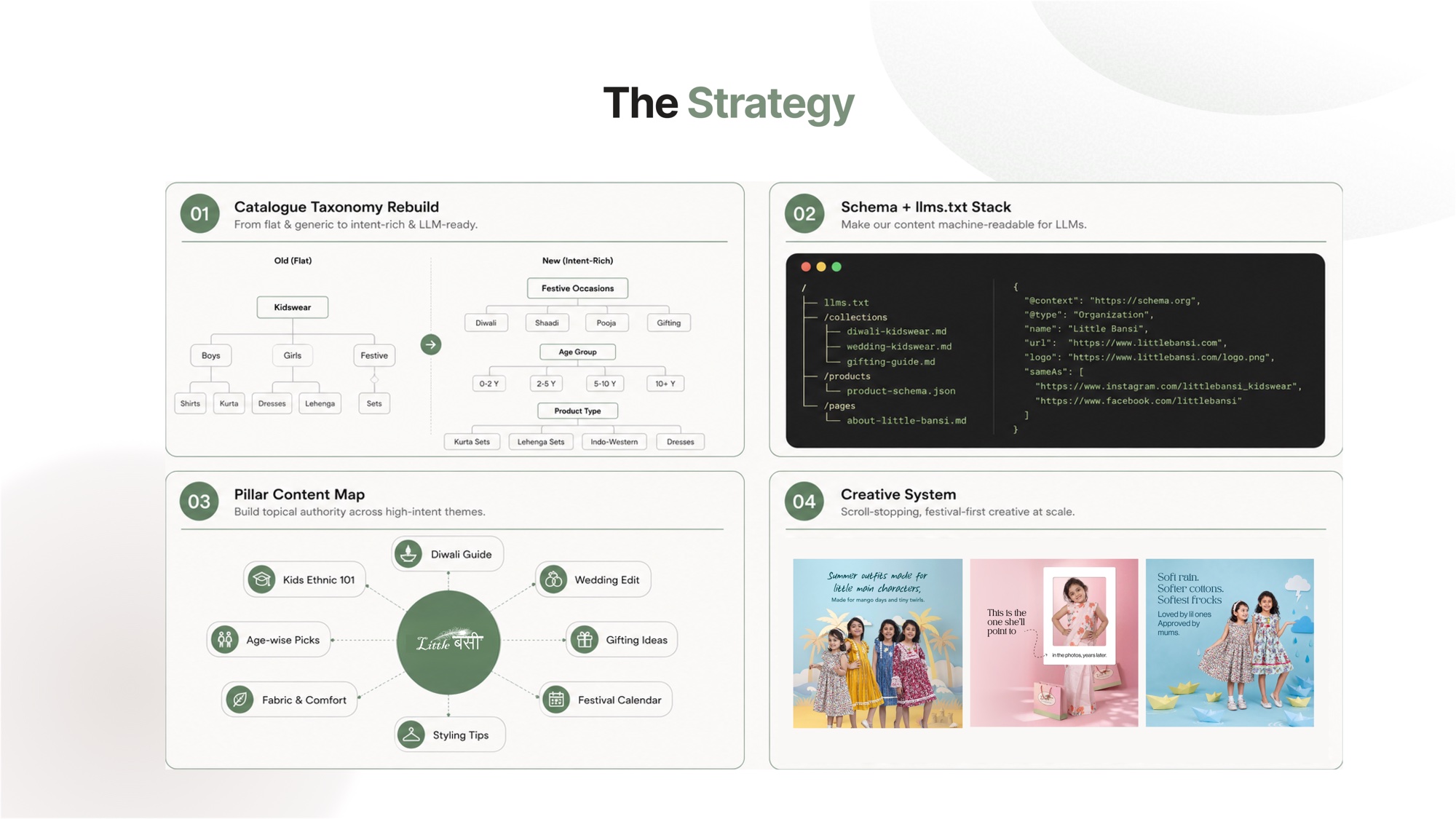
YARD ran a combined AEO + GEO + AIO + SXO LLM-SEO stack against Little Bansi — the same playbook now codified inside our content automation pipeline.
1. Rebuild the catalogue around buyer intent
We re-cut the product taxonomy from "boys/girls" into the way parents actually search: by occasion (wedding, Diwali, Raksha Bandhan, Janmashtami, haldi, mehendi, first birthday), by age band (0–2, 2–4, 4–8, 8–12), and by silhouette (anarkali, sherwani, lehenga, kurta set, dhoti set). Every product was re-titled, re-tagged, and re-meta'd. Internal category landing pages were generated for every occasion × age-band intersection that had meaningful search demand.
The catalogue rebuild also affected the site's URL structure, which meant a coordinated redirect plan — 301s mapped from every legacy URL to its closest new equivalent so that the organic equity Little Bansi had already accrued (limited, but real) was preserved across the move.
2. Schema, sitemaps, llms.txt — the AI search base layer
- Full Product, Organization, BreadcrumbList, and FAQPage schema across every PDP and category page
- A clean, fully-indexed sitemap.xml with priority weighting
- A robots.txt that explicitly allows GPTBot, PerplexityBot, ClaudeBot, Google-Extended, and Bingbot
- An llms.txt at the root — Little Bansi was one of the first Indian D2C brands to publish one — surfacing the brand's positioning, hero collections, and FAQ to LLM crawlers as structured context
llms.txt is the new frontier. The file is recognised by the LLM crawler ecosystem as a deliberate context document the brand is providing — different from robots.txt (which is permissions) and from sitemap.xml (which is index inventory). It is, effectively, the brand's introductory pitch to the model. Most brands haven't published one. Little Bansi has.
3. Content engineered to be cited, not just read
Long-form pillar content built around the questions parents actually ask LLMs — "what to dress my daughter in for a south Indian wedding," "best handloom kidswear under ₹3000," "how to dress kids for a winter haldi" — with quotable, citation-ready answer blocks, internal linking webs, and conversion-tuned CTAs.
The writing pattern is different from traditional blog writing. Each article has at least one direct-answer paragraph of 60–90 words near the top — short enough for an LLM to lift wholesale into an answer, structured enough to be quoted in attribution. The rest of the article supports and expands. Most agency-written blog content has the opposite shape (set-up first, payoff buried at the bottom). That shape doesn't get cited.
4. A creative engine that matched the new positioning
In parallel, we rebuilt the Meta creative engine: brand template system for consistency at scale, AI-generated video ads for festival campaigns, festival-native creative tied to the calendar, tiered offers to drive AOV uplift, and storytelling content replacing template-driven posts.
The Execution
The first 30 days were entirely infrastructure — taxonomy, schema, sitemap, llms.txt, content briefs. We pushed back on the brand team's desire to publish content immediately; the base layer had to be right first, or every published piece would carry the same defects as the legacy site.
Days 30–60: content publishing began at velocity — 3 pillar pieces a week, each engineered around a specific LLM-targeted question, each internally linked back into the new category architecture. We seeded the first batch of content with the highest-volume, lowest-competition LLM-prompt queries we'd mapped — "best ethnic wear brand for kids in India," "where to buy handloom kidswear online" — and watched citation behaviour begin to shift within four weeks.
Days 60–120: Meta creative engine relaunched against the new positioning. Festival campaigns (Navrathri, Diwali, Hanuman Jayanti, Akshaya Tritiya) ran as full visual stories rather than discount-led carousels. We deliberately reduced reliance on the "BUY 1 GET 1" creative pattern that had been propping up the legacy account, and replaced it with festival narrative — the daughter being dressed by the grandmother, the brother-sister Raksha Bandhan combo set, the first-Diwali baby outfit reveal.
Days 120+: we started testing prompts on ChatGPT, Perplexity, Claude, Gemini, and Bing. By month 5, Little Bansi was being named in answers across all five — for both branded and unbranded category queries.
What we tested that didn't work
Worth naming, in the interest of an honest case study: our first content batch over-indexed on listicle-style articles ("10 best kidswear brands for Diwali"). They ranked well on Google but performed weakly inside LLM answers. LLM citation behaviour seems to favour narrative-led, single-recommendation articles ("How to dress your 4-year-old for her cousin's wedding") over comparison listicles. We pivoted the next 30 days of briefs and citation share lifted accordingly.
"The first version of our content pillar would have made a great Google SEO play. It was the second version — narrative, parent-voiced, single-answer-led — that actually got cited inside ChatGPT."
The Results
| Metric | Outcome |
|---|---|
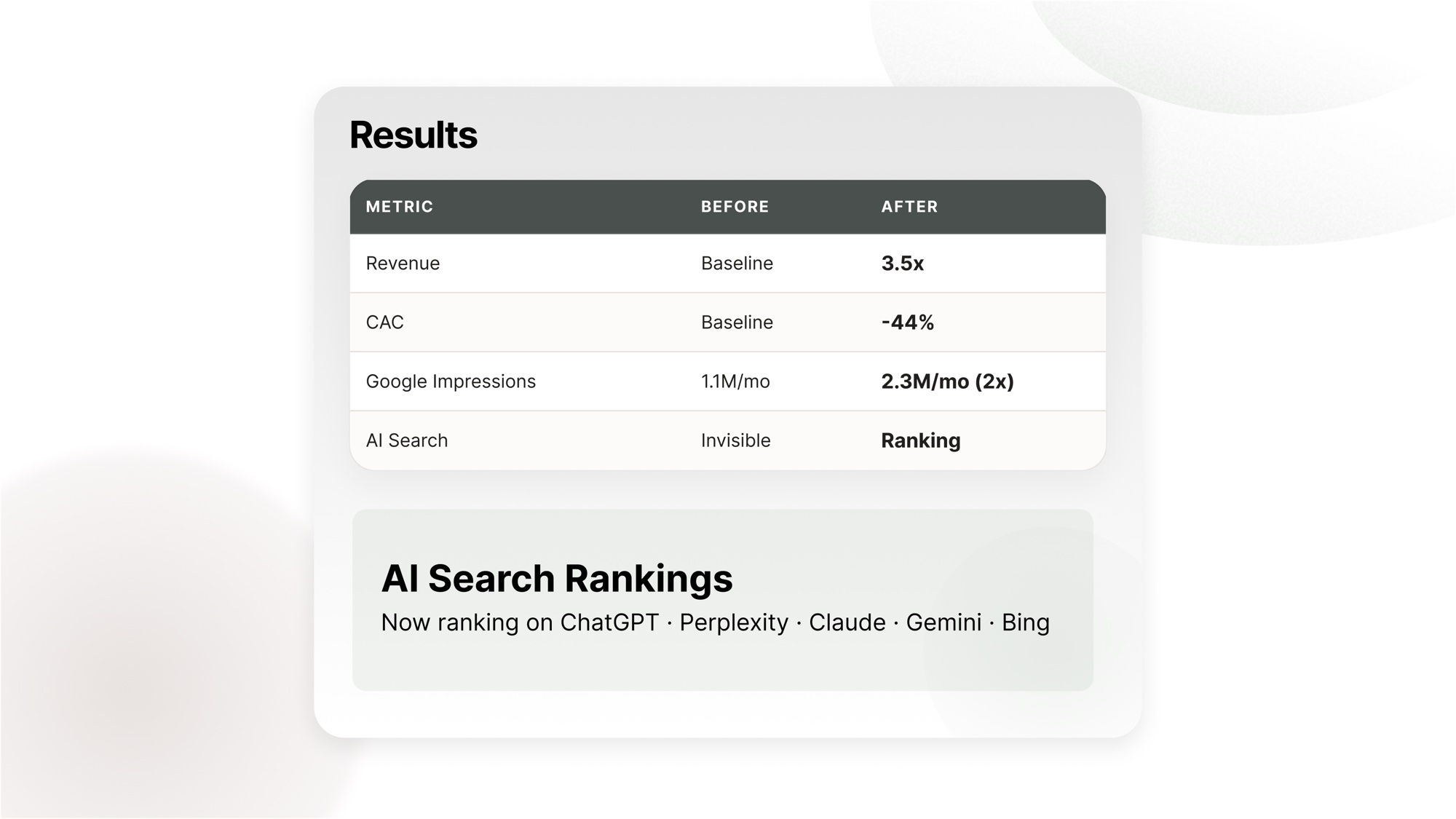
| AI search visibility | Ranking on ChatGPT, Perplexity, Claude, Gemini, Bing — all platforms confirmed |
| Revenue | 3.5x vs pre-engagement baseline |
| CAC | −44% |
| Organic SEO growth | \~2x in non-brand traffic |
| AOV | Up ₹350 from tiered offer architecture |
| Pillar content citation share | Measurable presence inside answers within 12 weeks of publish |
| Returning customer rate | Lifted on the back of festival-led creative storytelling |
The LLM win matters most. Once a brand is cited inside an answer, it doesn't have to compete on bid — it gets surfaced for free, every time a parent asks the question. That's a long-duration moat that compounds.
It also changes the shape of the marketing P\&L over time. Performance marketing is a tap you have to keep paying to keep open. LLM presence behaves more like organic SEO did in 2015 — it took work to build, and once built it kept paying back without per-click cost.
Why It Worked
- We optimised for the next interface, not the current one. Most agencies are still selling rank-3-on-Google. We sold rank-1-in-the-answer.
- Catalogue taxonomy is upstream of every other channel. Until the catalogue spoke buyer language, no amount of ad spend or content was going to scale efficiently.
- Content was engineered for citation, not for click. Different writing pattern. Different briefing. Different success metric.
- The infrastructure debt was paid down first. Schema, sitemap, llms.txt, redirect mapping — none of this is the story of the engagement, but it is what made the story possible.
Closing Thought
A brand that ranks #1 on Google gets clicks. A brand that gets cited inside an LLM answer gets trust — because the buyer has asked a question and received a recommendation, not a list. The shift is subtle and the moat is enormous. Little Bansi was early. Most kidswear brands will not be.

Ageasy — How a Senior-Care Brand Scaled 3–4x by Pairing Google Search With a Real Demand-Gen Engine

Stealth REIT — Building a Regulated PropTech's Martech Stack From Zero, and Cutting CPL 67%