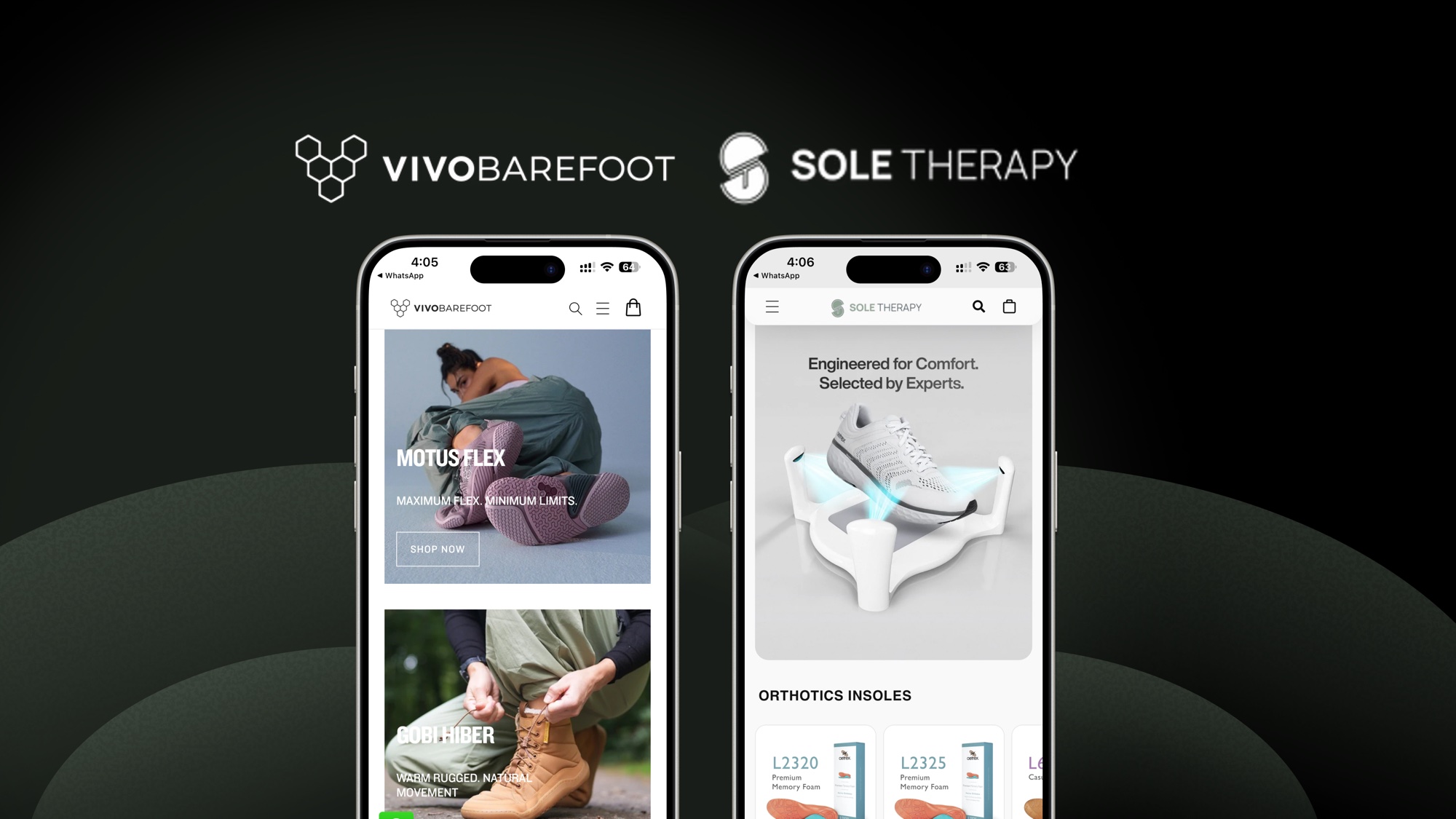
Vivobarefoot + SoleTherapy — How a Dual-Funnel Meta Architecture Held ROAS for 12+ Months in the GCC
Project Breakdown
Both are GCC footwear brands. One is a single-brand DTC barefoot specialist. The other is a multi-brand comfort footwear retailer carrying 247, LNDR, Nike Strength, and more. Dramatically different starting points. Same dual-funnel Meta playbook. Same outcome — ROAS held at scale for over a year.
| Clients | Vivobarefoot (single-brand DTC barefoot) + SoleTherapy (multi-brand comfort footwear, 18+ brands) |
|---|---|
| Industry | Premium Footwear Retail |
| Region | GCC (UAE + Saudi Arabia) |
| Channels | Meta (Facebook + Instagram), Google Shopping, Merchant Center |
| Engagement | Performance Marketing |
| Timeline | 12+ months (still scaling) |
The Clients
Vivobarefoot is the GCC arm of the global barefoot footwear movement — a single-brand DTC operator selling minimalist shoes for runners, walkers, and the growing "natural movement" community. The product story is unusual: barefoot shoes deliberately reduce cushioning and arch support, on the premise that the human foot is engineered to move without intervention. It's a counter-intuitive sell. The buyer has to be educated before the conversion is available.
SoleTherapy is the opposite shape: a multi-brand comfort and orthotic-led retailer carrying 247, LNDR, Nike Strength, and over a dozen other brands across the GCC. Their buyers are looking for arch support, plantar fasciitis relief, diabetic-safe footwear — high-intent, condition-driven purchases.
Two completely different product narratives. Two completely different audiences. One agency relationship.
The GCC layer underneath both brands
The GCC market itself adds a third dimension to both stories. The UAE and Saudi Arabia have distinct footwear-buying cultures — UAE has higher penetration of expat athleisure brands and a more developed home-gym culture (which feeds both barefoot and orthotic adoption), while Saudi Arabia's post-Vision-2030 fitness investment is producing a younger, more lifestyle-curious buyer cohort that hasn't yet been deeply segmented by any of the major footwear retailers.
Climate is also not a footnote. A barefoot shoe in 45°C UAE summer is a different sell from a barefoot shoe in 22°C UAE winter — the use-case shifts from outdoor running to indoor training, and the creative messaging has to follow.
The Problem
When YARD took the accounts on, both brands were stuck on the same plateau — just for different reasons.
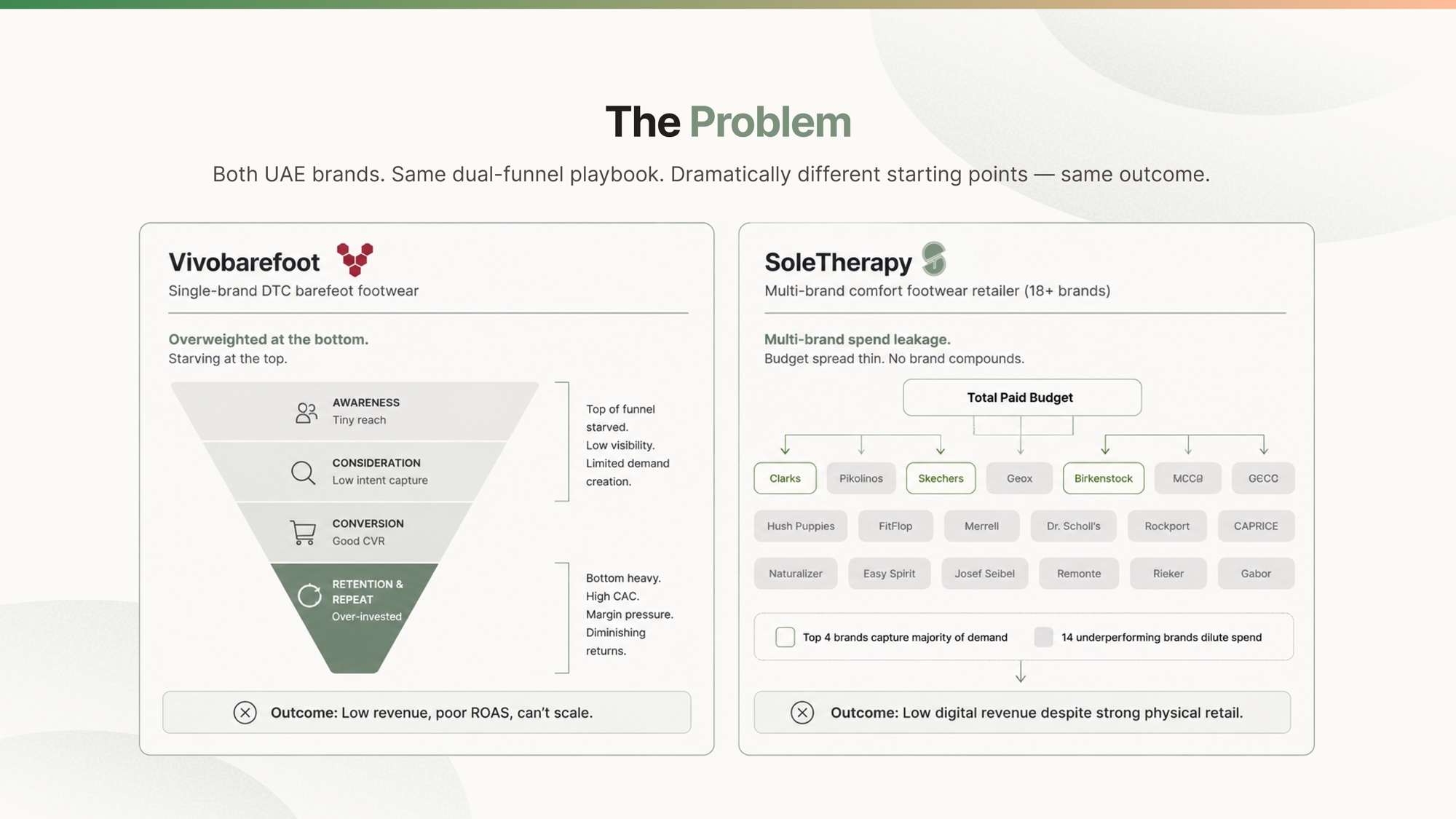
Vivobarefoot's plateau was a niche-awareness problem. Barefoot shoes are still a category most GCC buyers haven't been educated into yet. Cold prospecting was expensive, brand creatives were converting at the bottom of the funnel but never feeding the top.
SoleTherapy's plateau was a feed-and-architecture problem. 18+ brands, hundreds of SKUs, a Merchant Center catalogue that didn't separate condition-based queries ("shoes for flat feet") from style-based queries ("white sneakers"). Spend was leaking everywhere.
In both cases, the symptom was the same — ROAS that worked at small scale but collapsed past a certain spend ceiling.
The Strategy
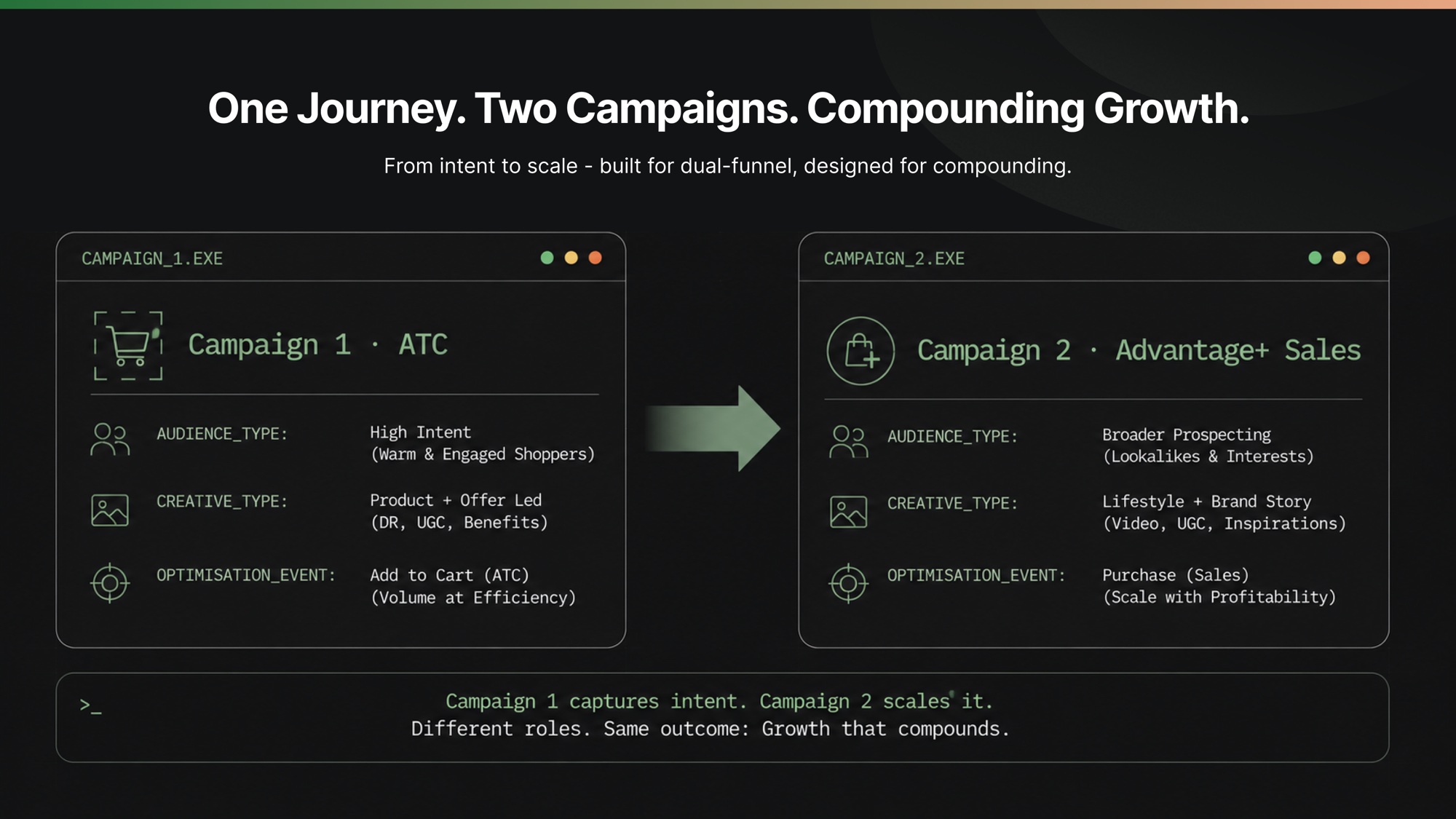
We standardised on a single architectural pattern across both accounts — what we now call the Dual-Funnel Meta Architecture.
Campaign 1 — ATC (Add-to-Cart)
A dedicated mid-funnel campaign optimised against Add-to-Cart events. Its only job is to feed the next campaign.
- Audience: broad-ish prospecting with light interest layers
- Creative: education-led for Vivobarefoot (why barefoot, who it's for), condition-led for SoleTherapy (flat feet, plantar fasciitis, arch support)
- Optimisation: ATC, not Purchase — because that's the next-step signal we actually need
The optimisation-event choice is the part agencies get wrong most often. Optimising the mid-funnel campaign for Purchase looks correct on paper — the goal is to make money — but in practice it starves the algorithm of the signal it needs to learn against. ATC is denser, faster-learning, and a high-fidelity precursor to Purchase.
Campaign 2 — Advantage+ Shopping for Sales
A dedicated bottom-funnel campaign on Meta's Advantage+ Shopping inventory, optimised for purchases, fed by the ATC audience from Campaign 1.
- Audience: the rolling pool of warm hand-raisers
- Creative: product-led, price-anchored, urgency-tuned
- Optimisation: Purchase value
This is a deceptively simple architecture. The reason it holds at scale is that each campaign is doing exactly one job — one is generating warm intent, the other is harvesting it — and the boundary between them is enforced by the optimisation event, not by audience tag.
Layer on top: condition-based segmentation (SoleTherapy)
For SoleTherapy specifically, we re-cut the feed and creative pool by condition — flat feet, arch support, diabetic-safe, post-surgery recovery, standing-all-day work shoes. Same dual-funnel underneath, but with audience and creative segmented by the buyer's actual problem.
The Execution
The first 60 days were spent rebuilding both Merchant Center feeds and standing up the dual-funnel architecture. We turned off every legacy campaign that didn't fit the new model — no exceptions, no "let's just test in parallel."
Once live, the architecture started behaving like a system. Spend could move up without ROAS collapsing because:
- New cold spend went into Campaign 1, generating ATC events
- Those events fed Campaign 2's audience pool the next day
- Campaign 2 optimised against purchase, not click — so the bidding got more efficient as the audience matured
- Creative refresh cycles were independent per campaign
"The architecture is the easy part to write down. The discipline of paused-not-paralleled legacy campaigns and the patience for fragmented learning to consolidate — that's where most accounts give up two weeks too early."
The Results
| Metric | Outcome |
|---|---|
| Vivobarefoot | Dual-funnel maintained ROAS at scale for 12+ consecutive months |
| SoleTherapy | Multi-brand ROAS unlocked via condition-based segmentation — every brand on the roster turned profitable inside 90 days |
| Architecture stability | Same playbook running today, with creative refresh as the only iteration variable |
| Merchant Center lift | Immediate ROAS improvement on both feeds within 2 weeks of title rebuild |
| Creative refresh cadence | Stable at roughly one major refresh per quarter |
The headline isn't a peak number — it's the duration. Holding ROAS for 12+ months at scale is what scaled brands need from their media partner. Peak ROAS is an Instagram screenshot. Sustained ROAS is a business.

Why It Worked
- One playbook, two shapes of business. Resisting the urge to "customise" the architecture per client is what made it portable.
- Optimisation event, not audience tag, is what creates the funnel. ATC then Purchase. Cleanly separated. Always.
- Condition is a better segmentation axis than style.
- Patience during learning is part of the architecture.
Closing Thought
Twelve months of held ROAS isn't a headline number. It is what every brand at scale should actually be asking their media partner for. The peaks are bragging rights. The duration is the business.
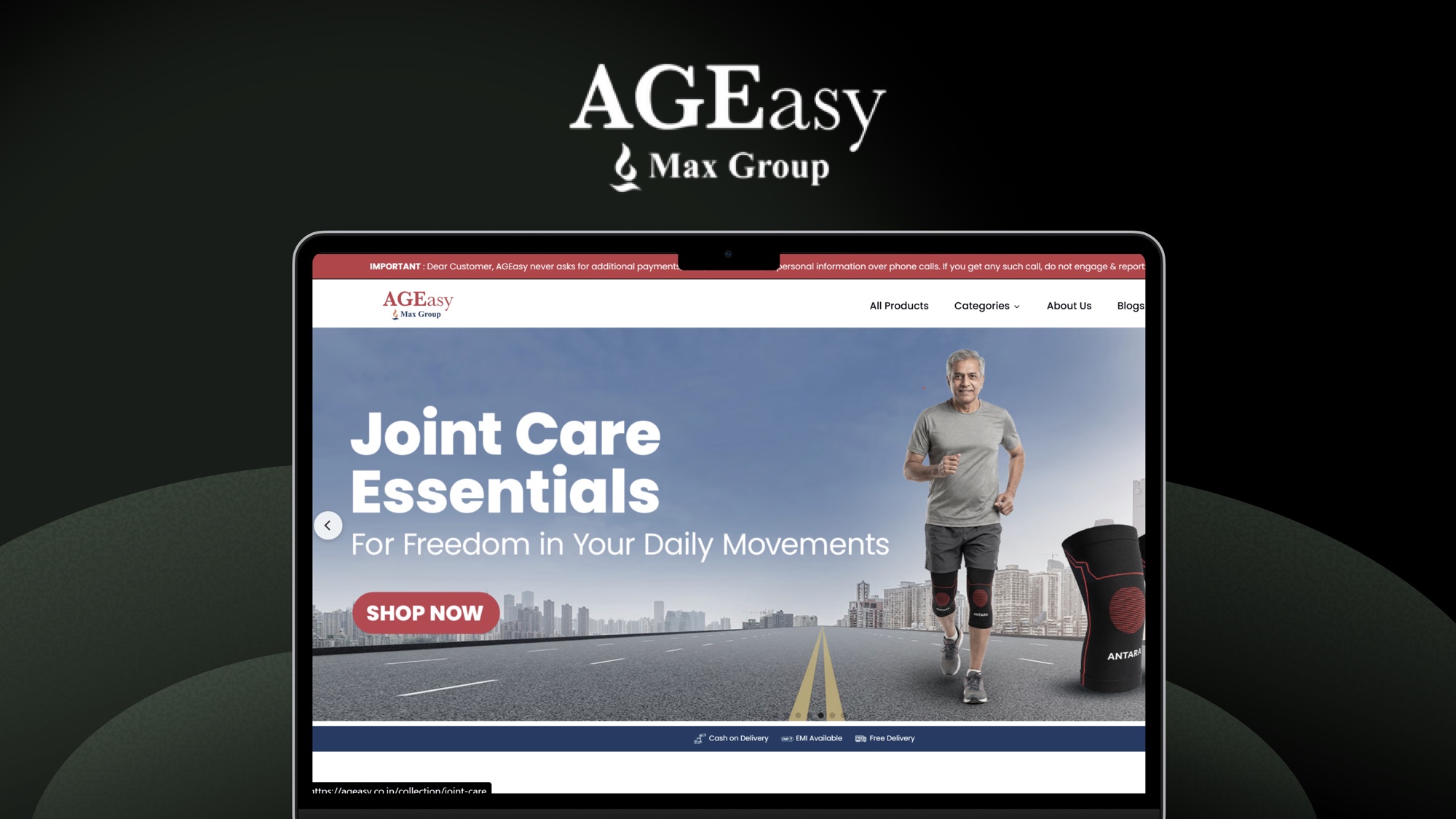
Ageasy — How a Senior-Care Brand Scaled 3–4x by Pairing Google Search With a Real Demand-Gen Engine

Stealth REIT — Building a Regulated PropTech's Martech Stack From Zero, and Cutting CPL 67%