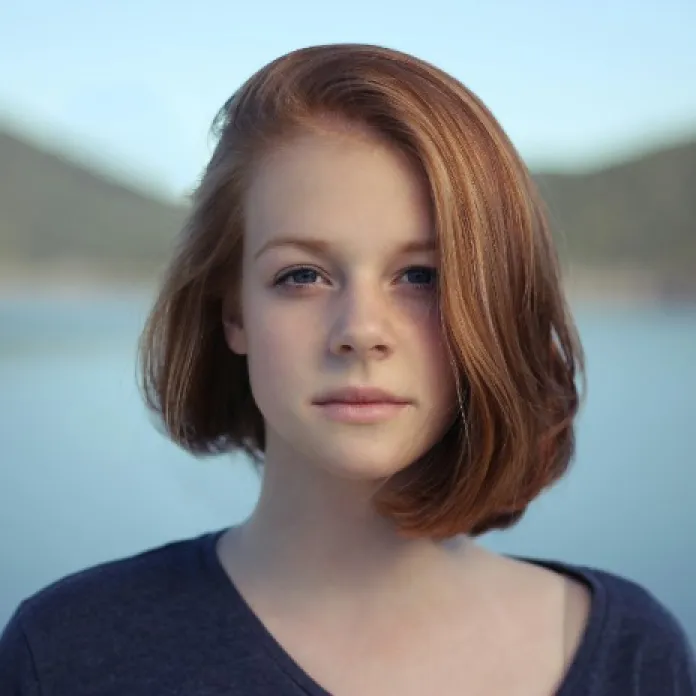
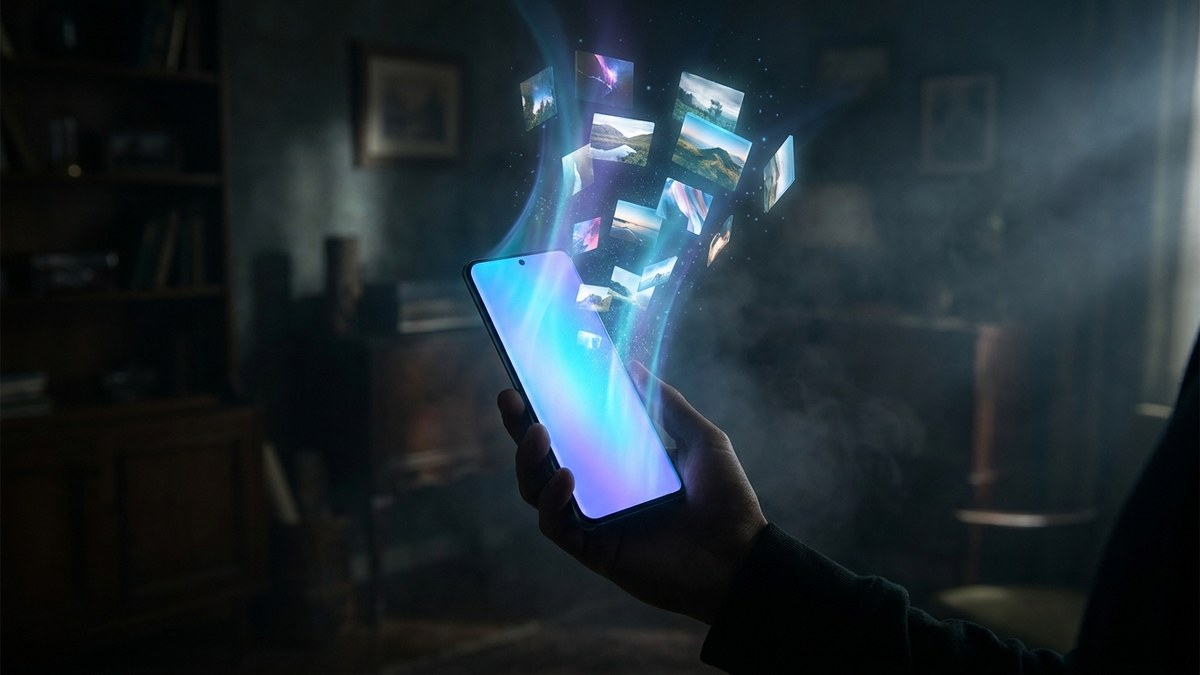
On July 7, 2026, Meta Superintelligence Labs (MSL) launched Muse Image, which it calls its most advanced image generation model, alongside Muse Video in preview. The headlines will focus on the pretty pictures. The part that actually matters for marketing teams is quieter and more important: Muse Image doesn't just map a prompt to a picture. It behaves like an agent — it searches the web for real facts, writes and runs code to get details right, and reviews and fixes its own output before you ever see it.
That shift, from a one-shot image filter to a reasoning agent, is the story. It changes what AI-generated creative can reliably do inside a real campaign, and it lands the capability directly inside the apps your audience already uses. Here is what Meta shipped, why "agentic" is the operative word, and what brand teams should do about it this week.
What Meta actually launched
Muse Image is a text-to-image model that also handles precise editing and multi-reference composition, per Meta's announcement. Muse Video, built on the same foundation, generates video with native audio and is currently in preview for creators.
Availability is the underrated detail. Meta says Muse Image is already live in the Meta AI app, on meta.ai, in Instagram Stories in the US, and in WhatsApp in a limited set of countries, with Facebook and wider Muse Video access coming soon. In other words, this isn't a research demo behind a waitlist — it's being pushed into the consumer surfaces where billions of people already create and share.

Why "agentic" changes the game
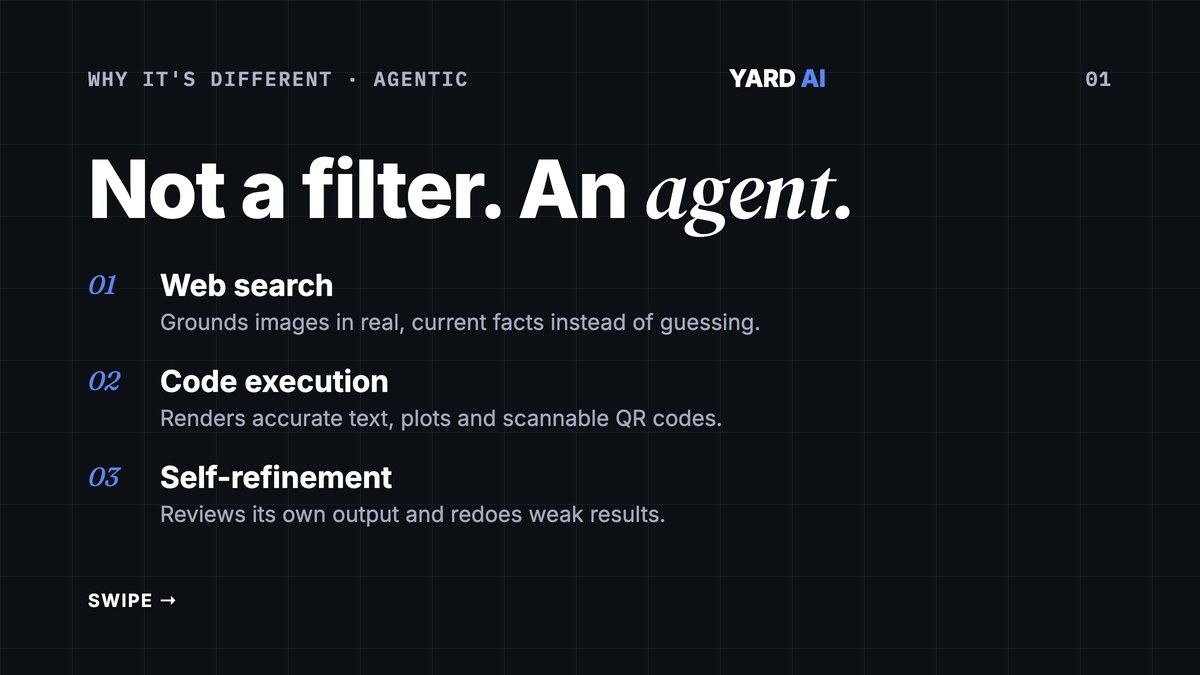
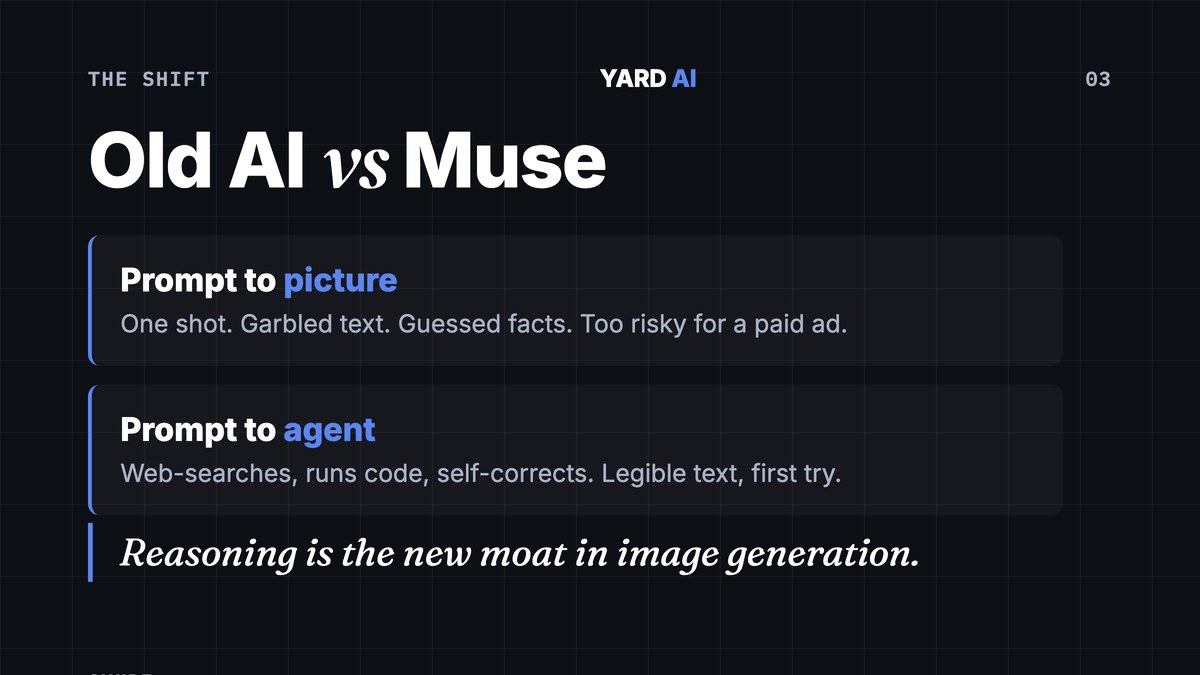
Traditional image models learn a direct mapping from prompt to pixels. Muse Image, according to Meta, operates more like an agent with tools:
- Web search to ground images in real, current facts instead of guessing them.
- Code execution to produce accurate text, plots, and scannable QR codes.
- Self-refinement — an emergent behavior where the model analyzes its own output and makes targeted edits, or regenerates entirely, when the result falls short.
Meta also notes that quality scales with inference-time reasoning in an approximately log-linear relationship — the more the model is allowed to "think," the better the output gets. For anyone who has fought with prompt-and-pray image tools, that is a meaningful change: the model is doing quality control before it hands you the result.
The real unlock for brands: accurate in-image text
Ask any marketer why AI images never made it into serious campaigns and you'll hear the same answer: the text comes out garbled. Logos smear, offer copy turns to gibberish, and QR codes don't scan.
Muse Image attacks that head-on by executing code to render text, plots, and QR codes accurately, Meta says. If that holds up in production, the practical implication is large: legible offer copy, cleaner brand lockups, and QR codes that actually work — on the first generation rather than the tenth. That is the difference between "fun toy" and "usable in a paid ad."
How Muse stacks up
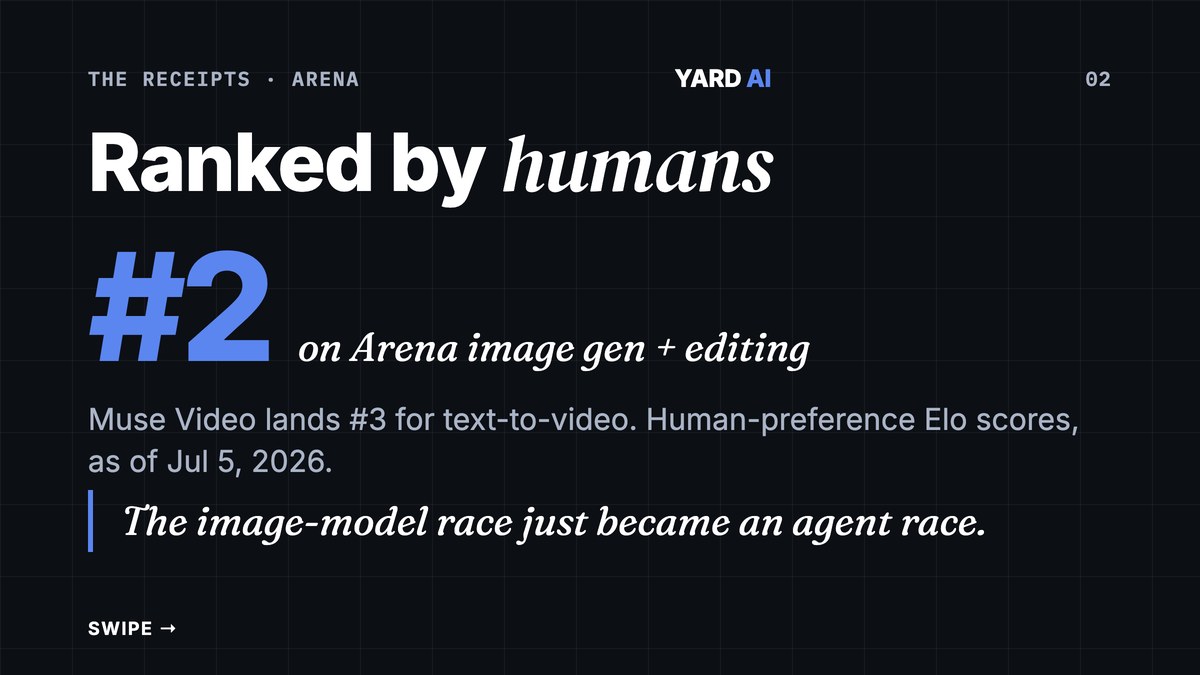
Meta reports that Muse Image ranks #2 on Arena across text-to-image generation, single-image editing, and multi-image editing, based on human-preference Elo scores as of July 5, 2026. Muse Video ranks #3 for text-to-video on the same leaderboard, per the launch post.
Two things to read into that. First, these are human-preference rankings, not a self-selected lab benchmark — real people picked these outputs. Second, #2 and #3 signal a genuinely competitive frontier model, not a catch-up release. The image-model race now has another serious contender, and it's the one wired into Instagram.
What it means for marketers
Beyond legible text, two capabilities matter for brand work:
Multi-reference composition. Feed Muse Image several inputs — a product, a person, a style — plus a text prompt, and it composes them into one coherent asset. For brand teams, that's a path to consistent visual storytelling: the same character or product rendered across a whole campaign without the drift that plagues single-prompt generation.
Distribution where your audience is. Because Muse Image is embedded in Instagram Stories and the Meta AI app, image generation isn't a separate tool your audience has to seek out — it's in the feed. That reshapes how quickly branded and user-generated creative can be produced and remixed inside the platform.
The strategic takeaway: the image-generation race just became an agent race. The models that can reason, verify, and self-correct will win the feed, because they produce usable assets instead of near-misses. Teams that rebuild their creative workflow around reasoning models — testing more variations, faster, at lower cost per asset — compound an advantage every time these tools get better.
The catch: watermarking and disclosure
Every image Muse produces carries an invisible watermark Meta calls Content Seal, which is designed to survive cropping, compression, and resizing, according to Meta; a detection tool is available at meta.ai/identification.
For brands, that makes AI disclosure a default rather than a choice. If your creative is generated with Muse, provenance travels with the file. Build AI-content disclosure into your content policy now — it's cheaper to set the standard early than to retrofit it after a campaign ships.
What to do this week
- Test the text. Generate your actual offer copy, a logo lockup, and a QR code, and check whether they render cleanly and scan. That single test tells you if Muse is ad-ready for your brand.
- Try multi-reference. Run one product plus one style reference through a short campaign set and judge consistency across frames.
- Write the disclosure rule. Decide how you'll label AI-generated creative before you scale it, not after.
- Re-run your automation math. Every time a frontier model gets cheaper and more capable, the "automate vs. do-by-hand" threshold moves. Revisit which creative steps are now worth handing to an agent.
Meta didn't just ship a better image model. It shipped an image model that thinks — and put it where your audience already is. That's the part worth planning around.
Is Muse Image free to use?
Muse Image is available inside Meta's own surfaces — the Meta AI app, meta.ai, Instagram Stories (US), and WhatsApp in limited countries — with more platforms coming. Meta has not published standalone pricing in the launch post; access is through those Meta products.
What makes Muse Image different from other AI image generators?
It's agentic. Rather than mapping a prompt straight to an image, Muse Image can search the web for facts, run code to render accurate text and QR codes, and refine its own output before returning it, according to Meta's announcement.
Can Muse Image create accurate text inside images?
Yes — Meta says it executes code to render text, plots, and QR codes accurately, which addresses the biggest reason brands have kept AI images out of real campaigns.
How good is Muse Image compared to competitors?
Meta reports Muse Image ranks #2 on Arena for text-to-image and single- and multi-image editing, and Muse Video ranks #3 for text-to-video, based on human-preference scores as of July 5, 2026.
Are Muse-generated images watermarked?
Yes. Every image carries an invisible "Content Seal" watermark designed to survive cropping, compression, and resizing, and Meta offers a detection tool at meta.ai/identification. Plan your AI-disclosure policy accordingly.
What should marketers do about Muse Image right now?
Test whether it renders your offer copy, logos, and QR codes cleanly; try multi-reference composition for brand consistency; and set an AI-disclosure standard before scaling AI creative.
Insights from Our Experts
Explore our latest articles on digital marketing strategies.