

Most D2C launches don't fail because the product is bad. They fail because founders scale spend before they have signal. Then they optimize for metrics that feel good but never pay rent.
At YARD, we've watched enough launches to know one thing. 0→1 is less about a clever channel hack and more about sequence. Do the right things in the right order, and even a modest budget compounds. Do them out of order, and a big budget just buys confusion faster.
So here's the honest version. If YARD launched your D2C brand tomorrow, this is exactly how we'd run the first 30 days.
Phase 0: Offer & positioning (before you spend a rupee)
We don't open an ad account first. We pressure-test the offer.
Three questions have to be answerable in one sentence each. Who is this for? What single problem does it kill? Why you, over the other options already open in their head? If those answers are mushy, no media budget will fix it. You'll just pay to amplify a message that doesn't land.
A sharp offer makes cheap traffic convert. A weak offer makes expensive traffic vanish. This is the highest-leverage hour of the launch. It costs nothing but honesty.
Phase 1: Tracking & foundations
Boring, non-negotiable, done before anything goes live. Clean pixel setup. Server-side events to survive signal loss. Disciplined UTM conventions. One source of truth for numbers everyone agrees on.
The reason is simple. If you can't trust your data, every decision after this is a guess wearing a strategy costume. This is not a fringe worry. Gartner survey data shows 72% of marketers lack confidence in their attribution data quality, often due to fragmented platforms and incomplete tracking. We refuse to be in that group.
Phase 2: The creative engine
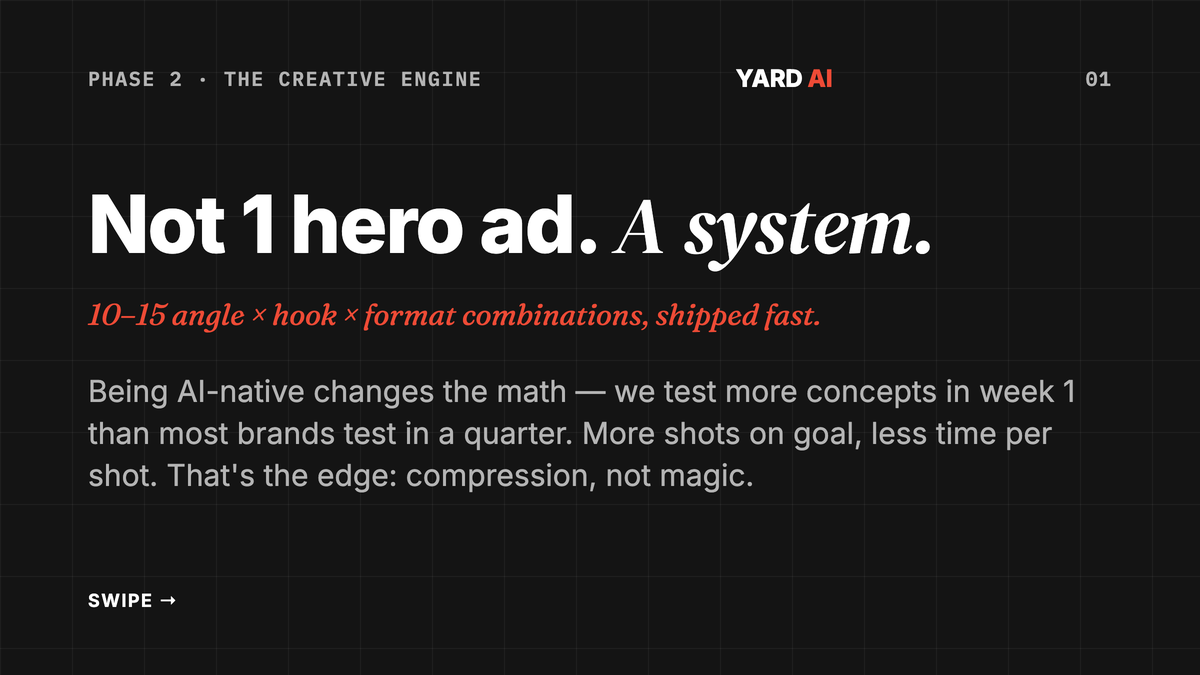
New founders think they need one perfect hero ad. They actually need a system.
We build a matrix. Ten to fifteen combinations of angle, hook, and format, shipped fast. Different pains, different proof, different opening lines. The goal in week one isn't to be right. It's to find out what's right as cheaply as possible.
This is where being AI-native changes the math. AI-assisted production and analysis let us put more concepts in market, and read them faster, than a traditional setup. More shots on goal, less time per shot. That's the edge. It's not magic; it's compression. Work that took weeks gets done in days. So the brand learns sooner and pays less for every lesson.
Phase 3: Channel sequencing
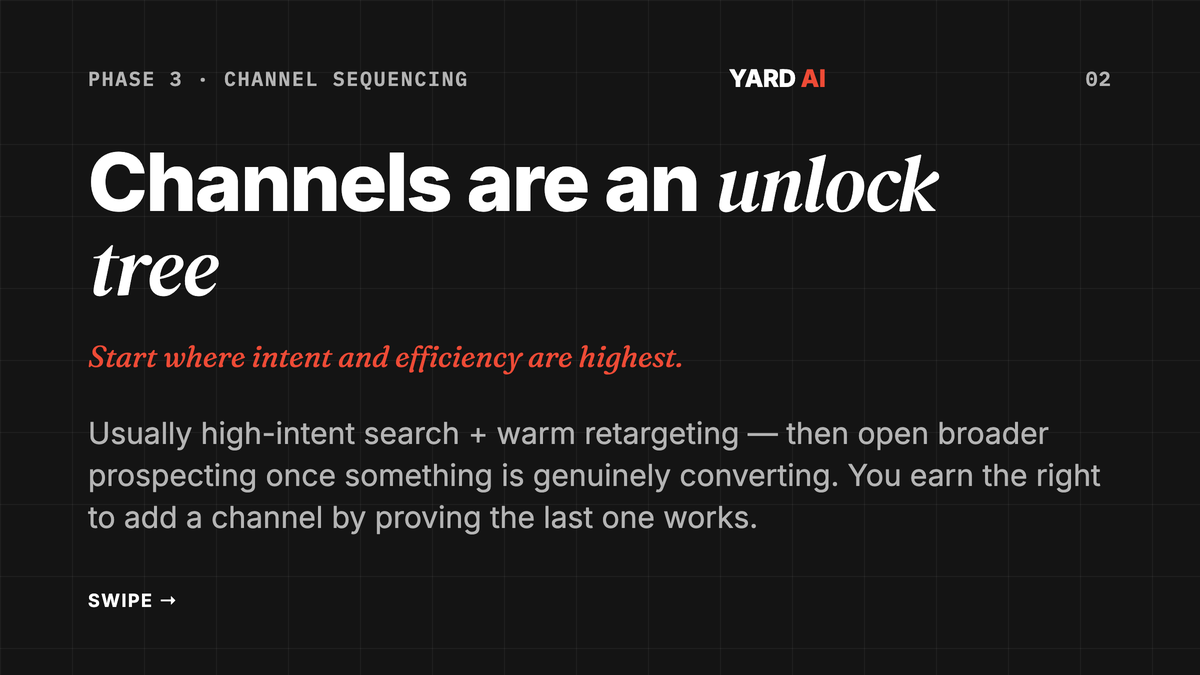
We don't spray budget across six channels on day one. We start where intent and efficiency are highest. Usually that's high-intent search and warm retargeting. That's where the first profitable conversions are easiest to find.
Once something is genuinely converting, we open broader prospecting to feed the funnel. The principle is simple. You earn the right to add a channel by proving the previous one works. Channels are not a starting buffet. They're an unlock tree.
Phase 4: Read the signal
What you measure in week 1 is not what you judge in month 1.
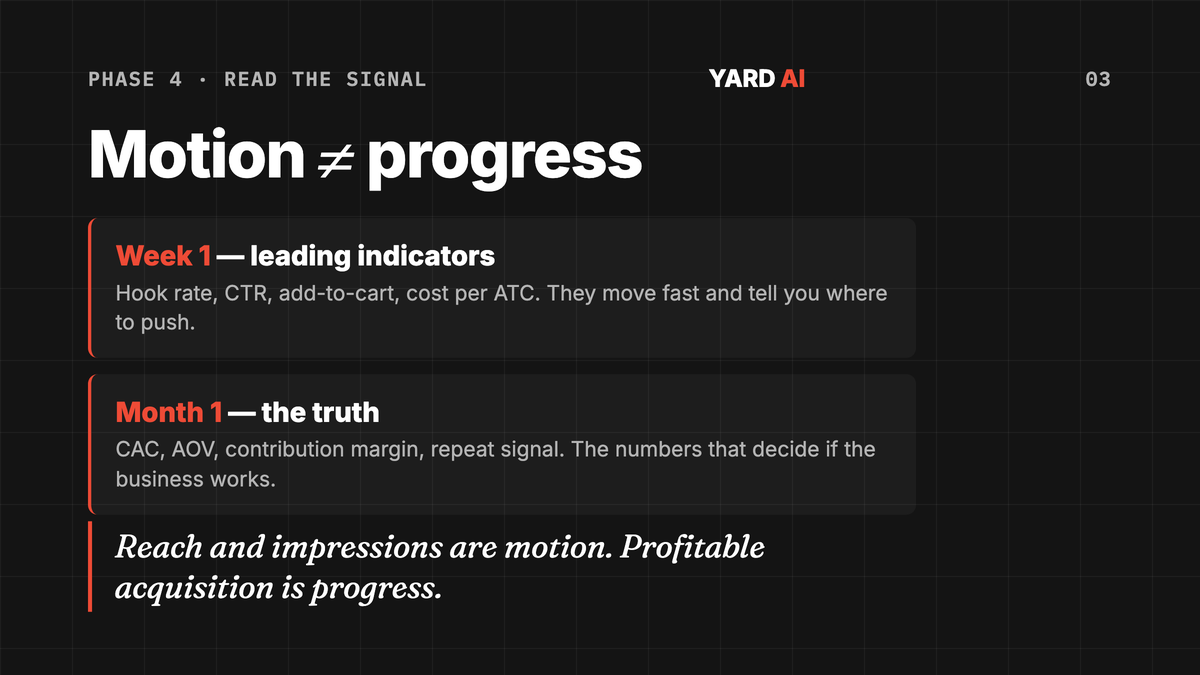
Week 1 is about leading indicators. These are the early tells for whether creative and targeting are alive. Watch hook rate, click-through rate, add-to-cart rate, and cost per add-to-cart. They move fast and tell you where to push.
Month 1 is about the truth. These are the numbers that decide whether the business works: CAC, AOV, contribution margin, and early repeat-purchase signal. Benchmarks help set expectations. Shopify reports average CAC near $127 in health and beauty and $129 in fashion. Retainful pegs the healthy LTV:CAC ratio at 3:1. But your number against your margin is the only one that matters.
We never confuse motion with progress. Reach, impressions, and likes are motion. Profitable acquisition is progress.
Phase 5: Scale
Found a winner? Now, and only now, we pour fuel. In steps, not a cliff jump.
That means duplicating winning creative and audiences, expanding incrementally, and pacing budget so CAC stays sane while volume climbs. Scale too fast and you outrun your signal. The algorithm and your margins both punish you for it. Scaling is a reward for evidence, not a substitute for it.
The AI-native edge
The edge isn't a buzzword. It's two compounding advantages: speed of creative and speed of analysis. When you can produce and test more ideas, and read results faster, you shorten the loop between "we think" and "we know." Over a 30-day launch, that shorter loop is the whole game. It's the difference between guessing your way to month two and knowing where the next rupee goes.
Mistakes to avoid
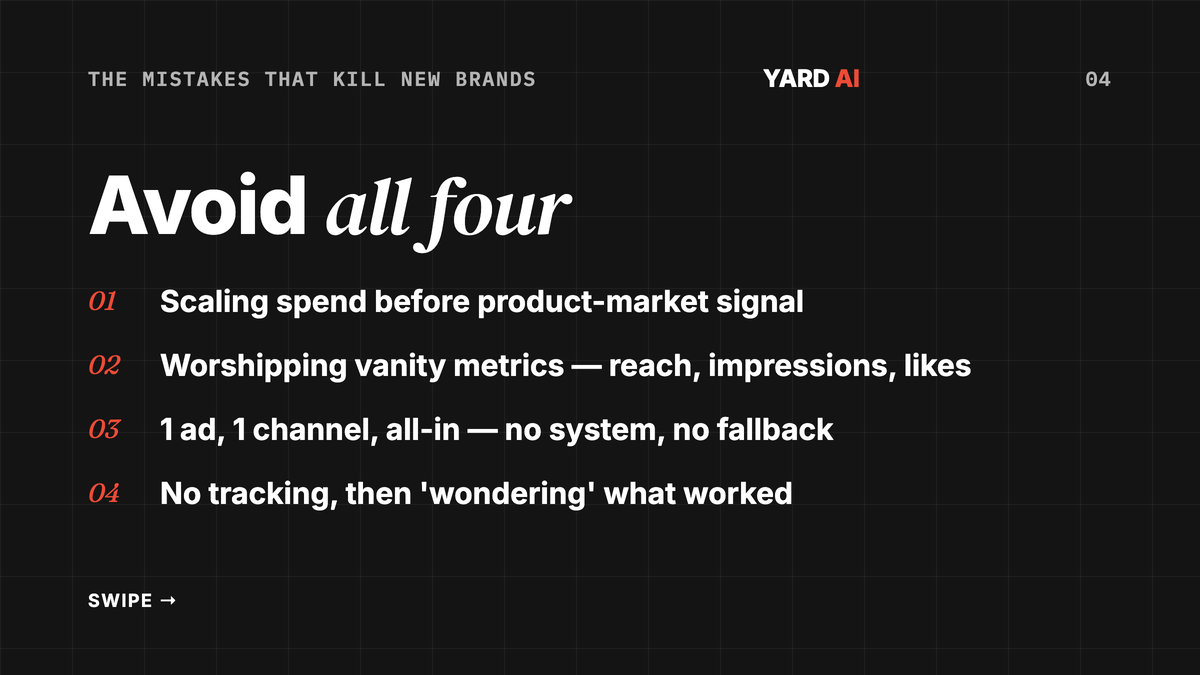
- Scaling spend before product-market signal. The most expensive mistake in D2C. Budget amplifies whatever you have, including a message that doesn't work.
- Worshipping vanity metrics. Reach and impressions feel like progress and fund nothing. If a metric can't tie to profitable acquisition or retention, it's decoration.
- One ad, one channel, all-in. No system, no fallback, no learning velocity.
- Launching without tracking, then "wondering" what worked. You can't optimize what you never measured.
FAQ
How much does it cost to launch a D2C brand?
There's no single number. Costs depend on category, margin, and channel mix. Benchmarks help, but your CAC against your own margin is what decides viability.
What is a good CAC for a new D2C brand?
It varies by vertical. Shopify data shows average CAC near $127 in health and beauty and $129 in fashion. Aim for an LTV:CAC ratio of at least 3:1.
Which channel should a D2C brand start with?
Start where intent and efficiency are highest, usually high-intent search and warm retargeting. Add broader prospecting only once something is genuinely converting.
How long does a 0→1 D2C launch take?
Our playbook runs the first 30 days. Week 1 reads leading indicators like hook rate and add-to-cart rate. Month 1 judges the truth: CAC, AOV, and margin.
Why is tracking so important before launch?
Because bad data makes every later decision a guess. Gartner data shows 72% of marketers lack confidence in their attribution. Clean pixels and server-side events fix that early.
What does "AI-native" actually change?
Speed. You produce and test more creative, and read results faster. That shortens the loop between a hunch and a proven answer, so you spend less per lesson.
When should you scale spend?
Only after you find a repeatable winner. Scale in steps, pace budget so CAC stays sane, and treat scaling as a reward for evidence.
How YARD would run it for you
0→1 isn't about being loud. It's about being disciplined enough to let the evidence lead. Offer first, clean data, a fast creative engine, channels in sequence, and scale earned by signal.
That's how we think, and it's how we'd launch your brand. Want to see it in practice? Read how we built growth for real brands, then explore our performance marketing approach. If you're taking a D2C brand to market and want an AI-native team running this playbook with you, let's talk.
Insights from Our Experts
Explore our latest articles on digital marketing strategies.